EasyJet Flight Forced into Emergency Landing After Bird Strike Over Bristol
An Airbus heading to Edinburgh returned to its departure point minutes after takeoff following a collision with a bird and a distress signal.
 🚌Transport
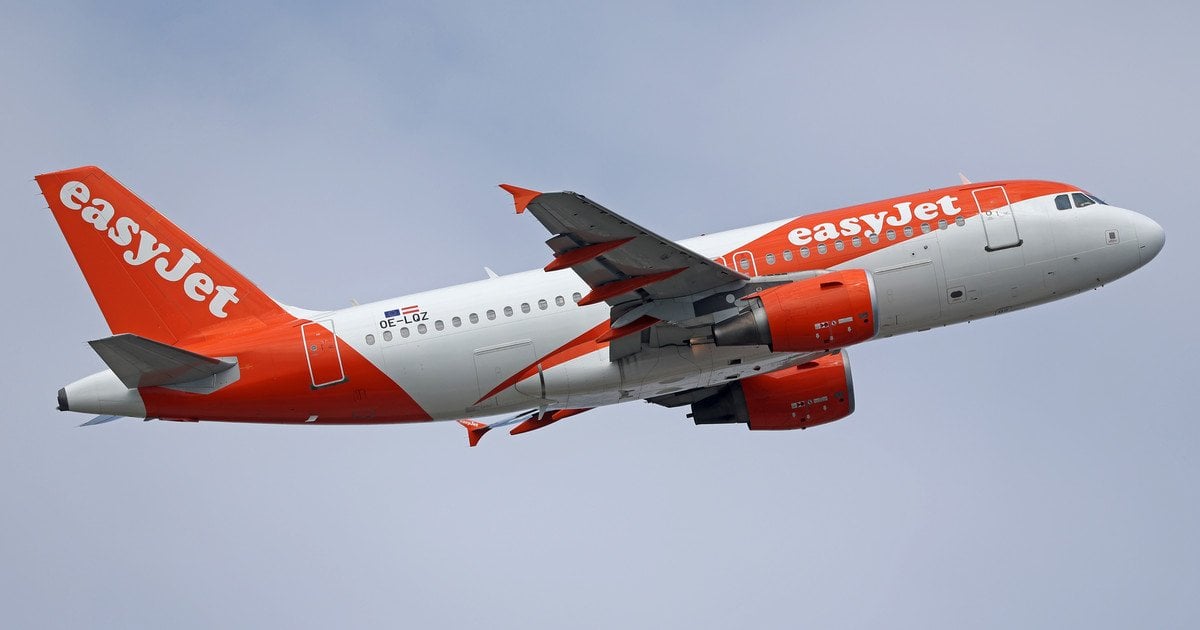
Photo: TSN
Key points
- Flight EZY213 declared a 7700 emergency shortly after takeoff from Bristol.
- The aircraft successfully returned to the airport following a bird strike.
- A replacement flight was organized, resulting in a four-hour delay for passengers.
An EasyJet passenger flight traveling from Bristol to Edinburgh was forced to make an emergency return shortly after takeoff on the morning of November 18. The incident occurred when the Airbus aircraft struck a bird, prompting the flight crew to immediately declare an emergency and request a return to Bristol Airport.
The flight departed at approximately 9:30 AM, but within minutes, the crew transmitted the international transponder code 7700, which signifies a general emergency on board. Flight tracking data showed the aircraft turning over the Brecon Beacons National Park in South Wales before circling over the Bristol Channel to prepare for its approach. The plane landed safely about 40 minutes after its initial departure.
Safety Protocols and Passenger Impact
Upon landing, the aircraft was met by emergency services on the runway. EasyJet officials clarified that this was a routine precautionary measure in line with safety regulations. "The aircraft landed normally and emergency services met the aircraft on arrival as a precaution," the airline stated, confirming that the bird strike was the sole cause of the diversion.
No injuries were reported among the passengers or crew. To minimize further disruption, the airline arranged a replacement aircraft, which departed Bristol at 11:55 AM. Although passengers reached Edinburgh nearly four hours behind schedule, the carrier emphasized that safety remains their absolute priority. The damaged aircraft was taken out of service for a thorough technical inspection.
Bird strikes represent a persistent challenge for aviation safety worldwide. To mitigate these risks, aerospace engineers conduct rigorous testing, including the use of pneumatic cannons to fire simulated objects at engines and windshields. These tests ensure that modern aircraft can withstand such impacts and maintain structural integrity during critical phases of flight.
Source TSN — tsn.ua/svit/litak-podav-syhnal-lykha-za-kilka-khvylyn-pislia-zlyotu-shc… ↗
Read next
 🛡️Security
Russian army losses in 2026 reach a record high since the start of the full-scale war
The General Staff of the Armed Forces of Ukraine reported that the number of casualties among occupation forces this year has already exceeded the total for 2024.
 👥Society
Ukraine to Launch Interactive Map of Housing for IDPs
The government plans to launch an online service to help internally displaced persons find suitable housing options.
 🛡️Security
Estonia warns against attacks on tankers in the Baltic Sea due to environmental risks
Estonian Prime Minister Kristen Michal stated that the country's territory cannot be used for attacks on vessels, emphasizing the threat of sea pollution.
 💡Tech
Holiday Gift Guide: 10 Ideas for Science and Tech Enthusiasts
A selection of unconventional gifts combining intellectual development, practical skills, and modern technology for the Varash community.
 🛡️Security
Court upholds detention of woman posing as medic during National Guard facility blockade
The Kyiv Court of Appeal has rejected the appeal of a suspect accused of provocations near a National Guard unit, keeping her in custody without bail.
Family-based care in Rivne region: over 200 children find new homes
In the Rivne district, 54 foster families and family-type orphanages provide care for 216 orphaned children.