Energy Pressure on Rivne NPP: Why Output is Dropping and Will Consumers Get Paid for Night Usage?
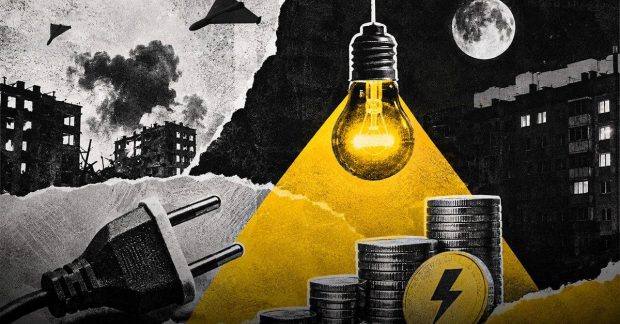
Due to substation damage, Rivne NPP has been forced to reduce generation, while experts discuss potential incentives for citizens to use electricity during nighttime hours.
 💼Economy
Photo: UNIAN
Key points
- Rivne NPP reduced its output because damaged substations cannot transmit the full load.
- Russian attacks aim to disconnect Kyiv from western nuclear power sources.
- Regulators are considering financial rewards for Ukrainians who shift their consumption to nighttime.
Recent Russian strikes on Ukraine's energy grid have focused on isolating key nuclear power plants from the national system. According to energy expert Stanislav Ignatiev, the adversary is attempting to sever the connection between Kyiv and the Rivne and Khmelnytskyi Nuclear Power Plants. This strategy creates immense pressure on the distribution network, even when the reactors themselves remain intact.
Isolation Strategy and Impact on Rivne NPP
Rivne NPP serves as a primary power source for multiple regions. However, damage to substations in neighboring areas, specifically in the Vinnytsia region, has hindered the grid's ability to absorb the plant's output. Consequently, operators had to decrease the working load at the station to prevent distribution node failures.
The attacks specifically target substations that step down voltage from ultra-high 750 kV to 330 kV. The "Kyivska" substation in the Makariv district is a frequent target, as it is vital for supplying the capital with power from western NPPs. In a worst-case scenario, if these nodes are completely disabled, Kyiv could face blackouts lasting up to 20 hours a day.
Nighttime Surplus: Financial Incentives for Consumers?
Despite peak-hour shortages, the system often experiences a surplus during the day and night. Currently, this excess energy is exported to Europe at rock-bottom prices. However, the National Energy and Utilities Regulatory Commission (NEURC) is considering a new proposal to benefit domestic consumers.
- Prioritizing domestic nighttime usage over cheap exports to the EU.
- Implementing a mechanism where consumers could effectively be "paid" to use electricity at night through billing deductions.
- Encouraging the charging of power stations and heavy appliance use during surplus hours.
While the situation in western Ukraine remains tense due to strikes on thermal plants in the Lviv and Ivano-Frankivsk regions, experts emphasize that the duration of power cuts will depend entirely on the intensity of future strikes and the speed of repairs to the high-voltage grid.
Source UNIAN — unian.ua/economics/energetics/doplata-za-elektroenergiyu-vnochi-v-u… ↗
Read next
 🛡️Security
Russian army losses in 2026 reach a record high since the start of the full-scale war
The General Staff of the Armed Forces of Ukraine reported that the number of casualties among occupation forces this year has already exceeded the total for 2024.
 👥Society
Ukraine to Launch Interactive Map of Housing for IDPs
The government plans to launch an online service to help internally displaced persons find suitable housing options.
 🛡️Security
Estonia warns against attacks on tankers in the Baltic Sea due to environmental risks
Estonian Prime Minister Kristen Michal stated that the country's territory cannot be used for attacks on vessels, emphasizing the threat of sea pollution.
 💡Tech
Holiday Gift Guide: 10 Ideas for Science and Tech Enthusiasts
A selection of unconventional gifts combining intellectual development, practical skills, and modern technology for the Varash community.
 🛡️Security
Court upholds detention of woman posing as medic during National Guard facility blockade
The Kyiv Court of Appeal has rejected the appeal of a suspect accused of provocations near a National Guard unit, keeping her in custody without bail.
Family-based care in Rivne region: over 200 children find new homes
In the Rivne district, 54 foster families and family-type orphanages provide care for 216 orphaned children.